Actually, think about the last time your heart rate jumped because a six-digit text refused to arrive for thirty seconds. That tiny panic is you noticing how thin the glass is between “logged in” and “everything is suddenly complicated.”
We call it an OTP. One-Time Password. It feels like a lock on a wooden door. You type it, the green tick appears, and for a moment you feel in charge.
Zoom out and the metaphor softens. You are not holding a permanent key. You are whispering a short-lived secret to a system that is constantly rotating the locks — while the rest of the internet keeps inventing smarter ways to guess.
The architecture of a temporary agreement
Time-based one-time passwords (TOTP) are defined in standards like RFC 6238 [1]. Basically: your phone and a server share a secret seed. Every thirty seconds or so, both plug that seed plus the current time into a cryptographic hash — often HMAC-SHA-1 — and spit out a number.
Same secret, same clock window, same number. When you type it in, the server is really saying: “Ah. You also know the seed, and you roughly agree what time it is.” Brilliant engineering. Also a reminder that a lot of digital safety is just shared math against a moving clock.
Where the story gets bigger than six digits
Here is where people sometimes jump straight to quantum horror movies. Slow down.
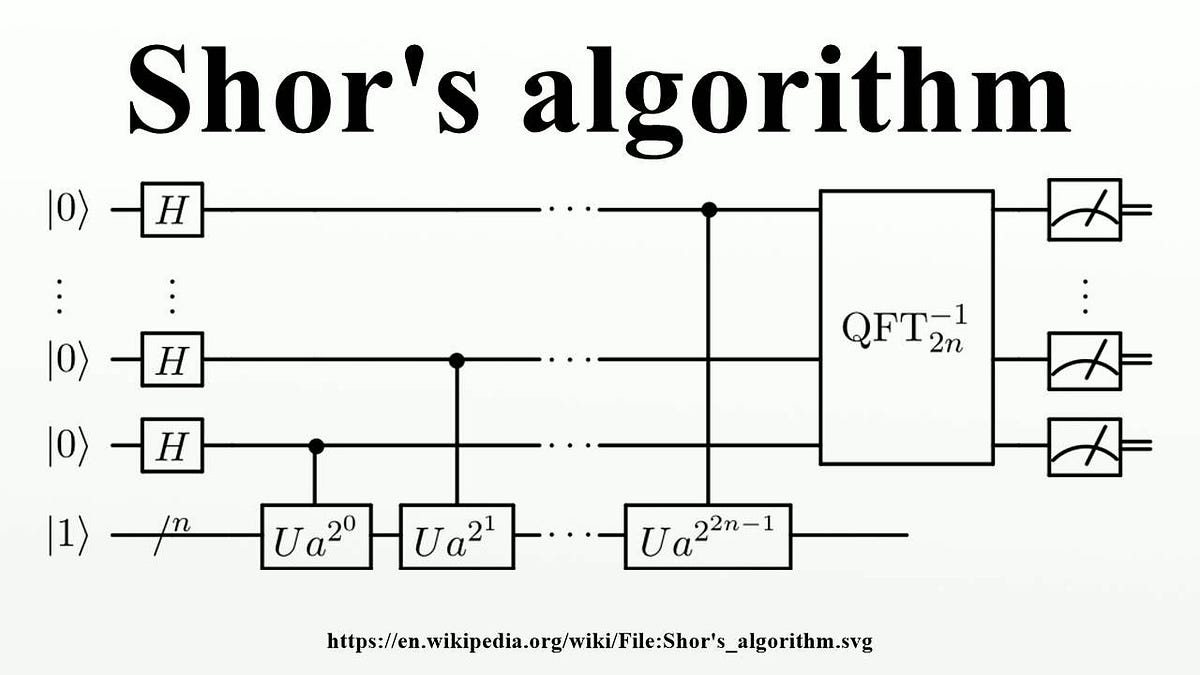
A huge amount of internet public-key cryptography assumes certain maths problems — like factoring huge numbers — stay hard for classical computers. Peter Shor’s 1994 quantum algorithm showed that a sufficiently large quantum computer could change that hardness for some of those problems [2]. That horizon gets nicknamed “Q-Day” in security conversations [3].
Important honesty check: standard TOTP codes themselves sit closer to shared secrets and hashing than to the public-key schemes Shor famously threatens. Quantum algorithms like Grover’s can still chip at symmetric/search-style security margins, which is why longer keys and careful migrations matter [4]. The broader point is cultural as much as cryptographic: the ecosystem of trust around your login is preparing for assumptions that may not hold forever. NIST and others are already standardising post-quantum algorithms for that reason [5].
What this feels like while you wait
Maybe that still sounds abstract while you are trying to open your electricity bill. Fair. But our mental models of security are often furniture metaphors — rooms, keys, padlocks — while the real thing is probabilistic and temporary. Research on everyday security mental models suggests people routinely misjudge low-frequency, high-impact failures until one happens [6].
We build locks out of shifting sand and then act surprised when the wind feels personal.
Back to ordinary life
So what is your OTP, really? Technically: a short-lived hash of time plus a shared secret. Practically: a ritual. A stuttering heartbeat of modern life that says you are renting security from an invisible engine of code and mathematics.
Next time you stare at the phone waiting for those six digits, you can still be annoyed. Just notice the strangeness underneath the annoyance. For a few seconds, human memory, telecom luck, and global computation all have to agree.
The code arrives. You type it in. The door opens. Until the next rotation.